

Compare bread prices: read per 100g, not the loaf tag
The quick answer: skip the bakery sticker and read the price per 100g. Then compare loaf with loaf in the same style, and check whether the special is a real low before it goes on your list.
Bread loaves look similar on the shelf, but pack sizes differ. The price on the front tells you what the pack costs. It does not tell you what the bread costs, and that is the number to compare.
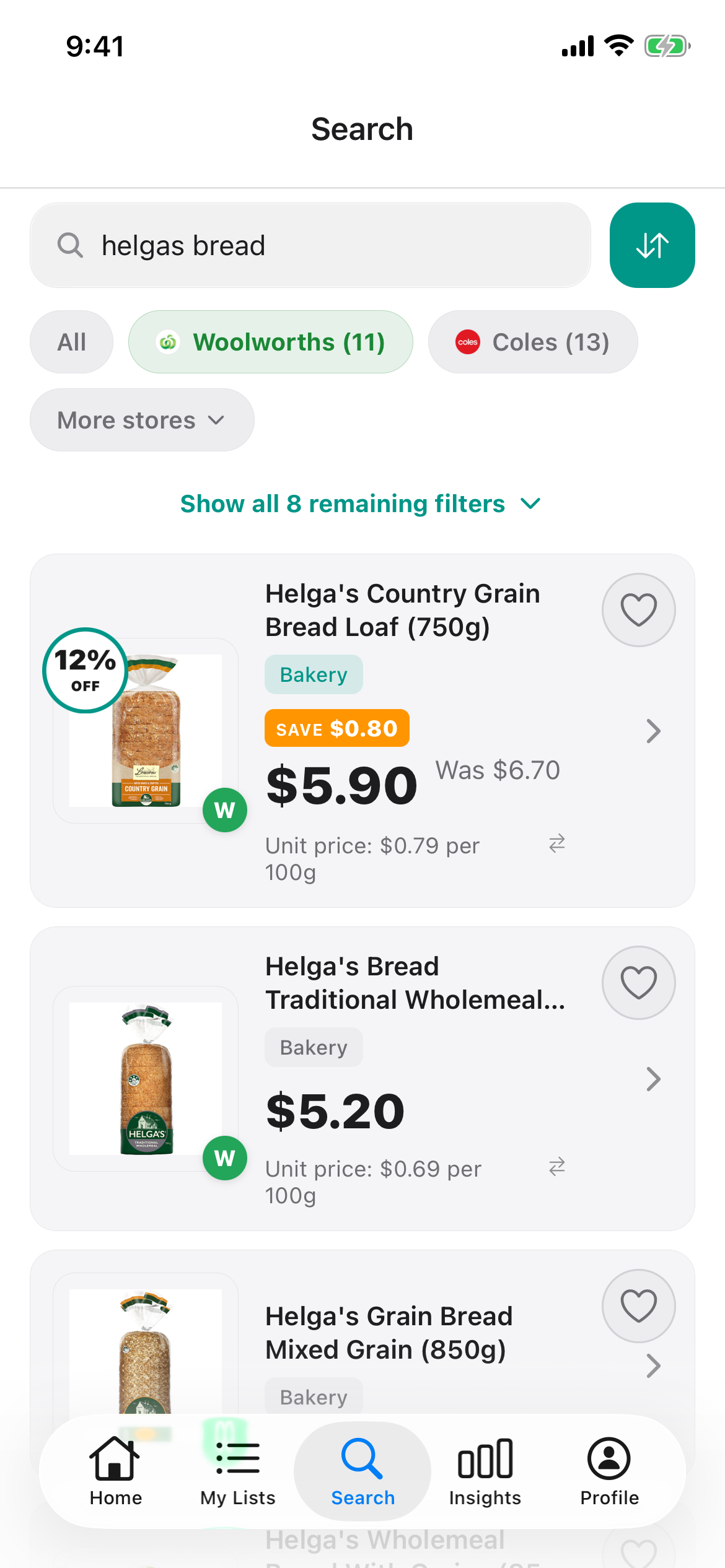
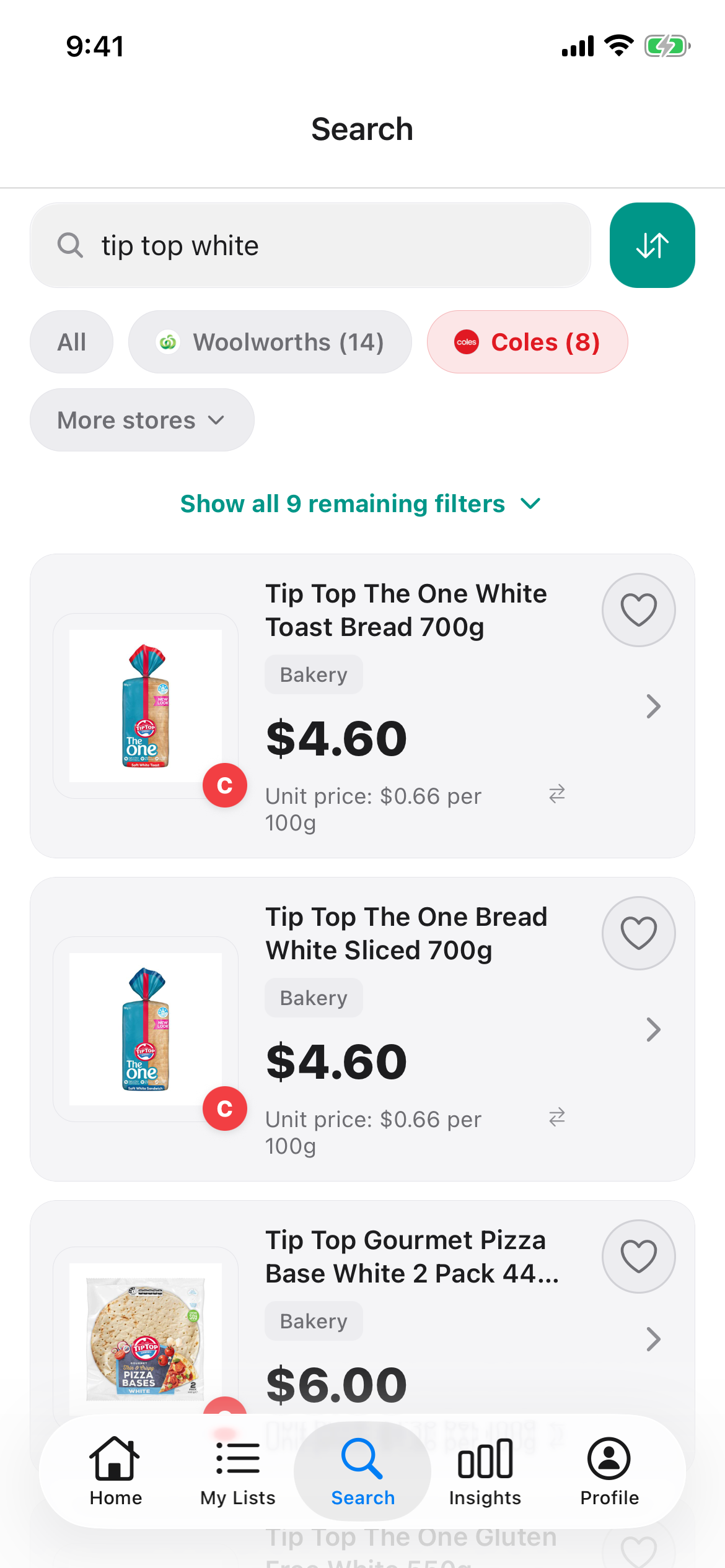
We make Discount Trolley, so the bias is obvious. The app shows the unit price on each product page and in search, right under the shelf price. On a loaf that line reads per 100g, so packs of different sizes can be lined up on the same number.
- Price per 100g beats price per loaf.
- Compare the same style of bread.
- Check the special before you stock up.
Why the bakery sticker is not enough
A loud tag on a big loaf can still work out dearer per 100g than a quieter pack at its normal price. Pack size is a packaging choice. The unit price is the fair test.
There is a second catch. Fresh bread does not last forever. A big pack only wins if your house finishes it while it still tastes the way you like. If you waste half a loaf, the cheap pack was not cheap.
So line the loaves up on price per 100g first. Then be honest about how much bread your house really eats before you reach for the biggest pack.
- Pack size is a packaging choice.
- A special can flip a big loaf versus a small loaf.
- Buy a size you will finish while it tastes good.
White, wholemeal, grain and wraps: compare like with like
Price per 100g only helps when you compare the same kind of bread. White toast, wholemeal, grain, rye, sourdough and wraps often sit near each other, but they are different products. Keep this check to like with like.
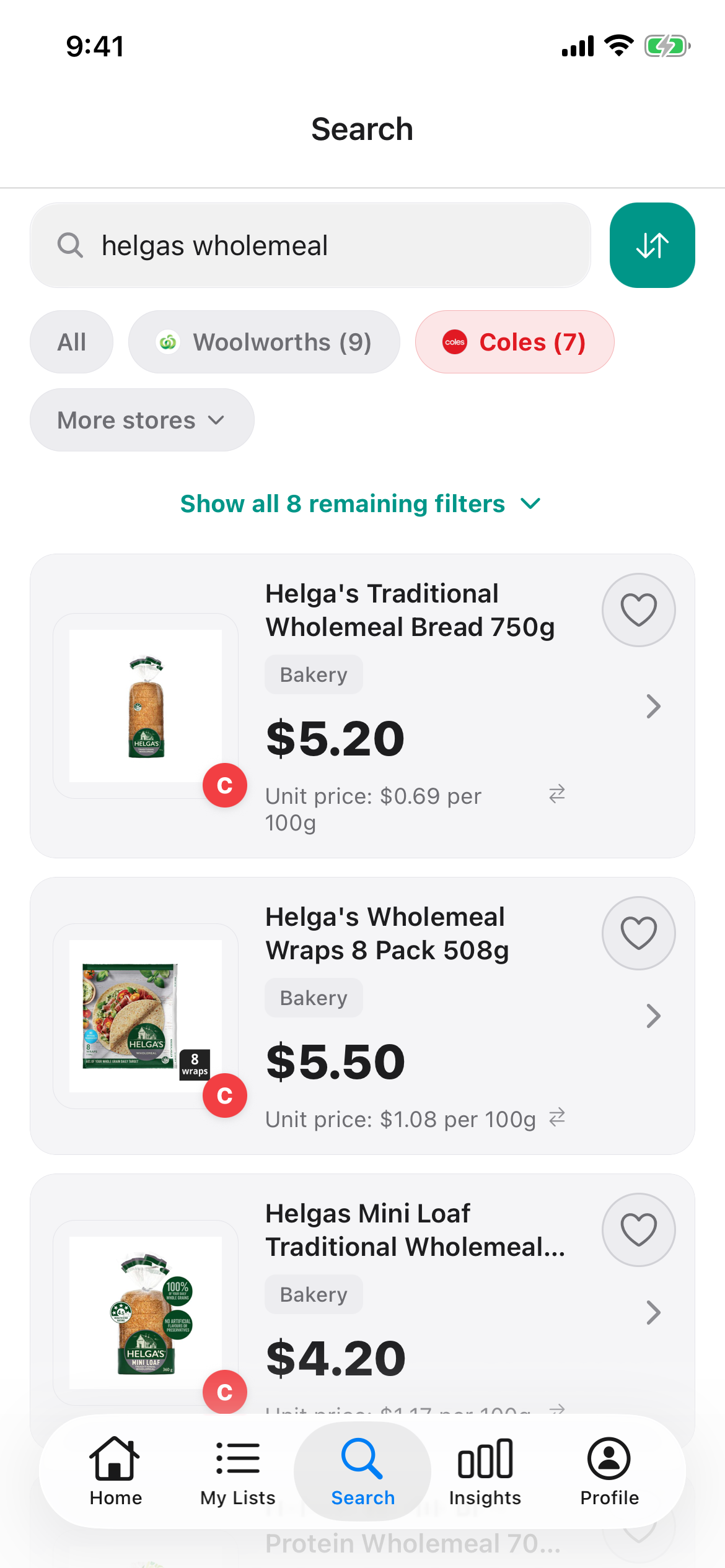
On the same style, pack size still changes the sum. A mini loaf and a full loaf can look close on the shelf tag and far apart per 100g. Wraps are another pack shape again, so do not line a wrap pack against a sliced loaf unless that is really what you want to eat.
Pick the style you like first, then let the price per 100g decide between the packs that fit.
- Same style first, then price per 100g.
- Mini loaves and wraps are different packs.
- Do not mix toast bread with pizza bases.
House brand vs name brand bread
Supermarket house brand loaves sit next to the big bakery names. House brands can be good value, but do not assume it. Put one house brand loaf and one name brand loaf you would happily eat side by side, in the same style, and let the price per 100g decide.
Name brand bread moves on and off special, so the gap between the two can change from week to week. On a good week a name brand loaf can beat the house brand. On another week it might not. The only way to know is to check the number on the day you shop.
When you find a loaf you like, save it as a favourite so you can reopen it fast next time instead of hunting through the bakery aisle again.
- Test one house brand and one name brand in the same style.
- Check the gap on the day you shop.
- Favourite the loaf you like.
Bread specials and stocking up without overpaying
Bread specials come and go, and a big tag makes it easy to buy on the badge instead of the price. A loud special on a big loaf can still work out dearer per 100g than a smaller pack at its normal price.
Before you load up, open the product in Discount Trolley and look at the price history. Dete, our koala, reads that history and holds up one sign: Good time, Wait if you can or About usual. When there is not enough history yet, the sign says Not sure yet. Tap the sign to see the chart.
Today's deals is the other quick check before you leave home. It shows what is on special now with the was-price next to it. A real low is a fair time to buy a loaf ahead, as long as you will eat it before it goes stale. For more on judging a deal, read how to spot a fake supermarket special and when a bulk buy grocery deal is worth it.
- Buy on a real low, not on a loud tag.
- Check price history before you stock up.
- Read the was-price, not only the badge.
Compare bread across stores on one list
Most of us grab bread in the same trip as everything else, so it belongs on the same list. Add the loaf you want to My List in Discount Trolley next to the milk and coffee, and the list shows a count for each store so you can see where your lines sit before you leave.
To check the same loaf at other stores, open the product page and scroll to Compare Stores. It shows the same product at other stores where data is available, and it tells you plainly when a product is not stocked somewhere, so you do not make a wasted trip.
For an example of how unit price reads on a bread pack, open Levant Bakery Lebanese Bread Wholemeal on Discount Trolley and look at the per 100g line under the price. For the habit on any staple, read how to use unit prices to find the cheapest groceries. To weigh a second stop, read should you split your grocery shop across two stores.
- One list for bread and the rest of the shop.
- Compare Stores for the same loaf at other stores.
- Check while you have signal, then shop the list.
What Discount Trolley does (and does not) claim about bread
Discount Trolley helps you check the grocery price information that is available for the loaves on your list. It does not promise savings, crown one brand or store as the cheapest forever, or carry the full range at all stores. Prices and specials change, so check again on the day you shop.
Woolworths, Coles, ALDI, IGA, Harris Farm, Priceline and Chemist Warehouse where data is available. Not affiliated with those stores. The shelf can differ from the screen. Live prices need a connection.
For more staple comparisons, see coffee beans price comparison Australia, toilet paper price comparison Australia, cheese price comparison Australia and compare milk prices on one list.
- No invented savings or rankings.
- No forever cheapest brand or store.
- No affiliation with the supermarket chains.
What this looks like in Discount Trolley
Questions shoppers still ask
What is the best way to compare bread prices?
Use the price per 100g, not the loaf tag. Compare the same style of bread first, then decide whether a pricier pack is worth it to you. Discount Trolley shows the unit price under the shelf price, so packs of different sizes line up.
Is a bigger loaf of bread cheaper?
Not always. A big pack can work out cheaper per 100g, but a smaller pack on special can beat a big pack at its normal price. Check the price per 100g, and only buy the big pack if you will finish it while it still tastes good.
Should I compare wraps with sliced bread?
Keep it like with like. Wraps, mini loaves and sliced toast are different packs, so a price per 100g across them does not tell you much unless that is really what you want to eat. Pick the type you use, then compare within it.
Are house brand loaves worth it?
They can be. Put one house brand loaf and one name brand loaf side by side in the same style and compare the price per 100g on the day you shop. Name brand specials can change the answer from week to week.
When should I stock up on bread?
When the price is a real low and you can eat what you buy before it goes stale. Open the product in Discount Trolley and check the price history, or look at Dete's sign: Good time, Wait if you can, About usual or Not sure yet.
Which stores does Discount Trolley cover?
Woolworths, Coles, ALDI, IGA, Harris Farm, Priceline and Chemist Warehouse where data is available. Not affiliated with those stores. The shelf can differ from the screen. Live prices need a connection.

Compare bread by the gram, not the sticker.
Download Discount Trolley free to read unit prices, open Today's deals and keep one shopping list for the whole shop. Use Compare Stores and price history when the check needs more.
- Unit prices under the shelf price on each product page
- Today's deals with the was-price beside the tag
- One list for bread and the rest of the shop
- Compare Stores and price history when you need them